
May 2026

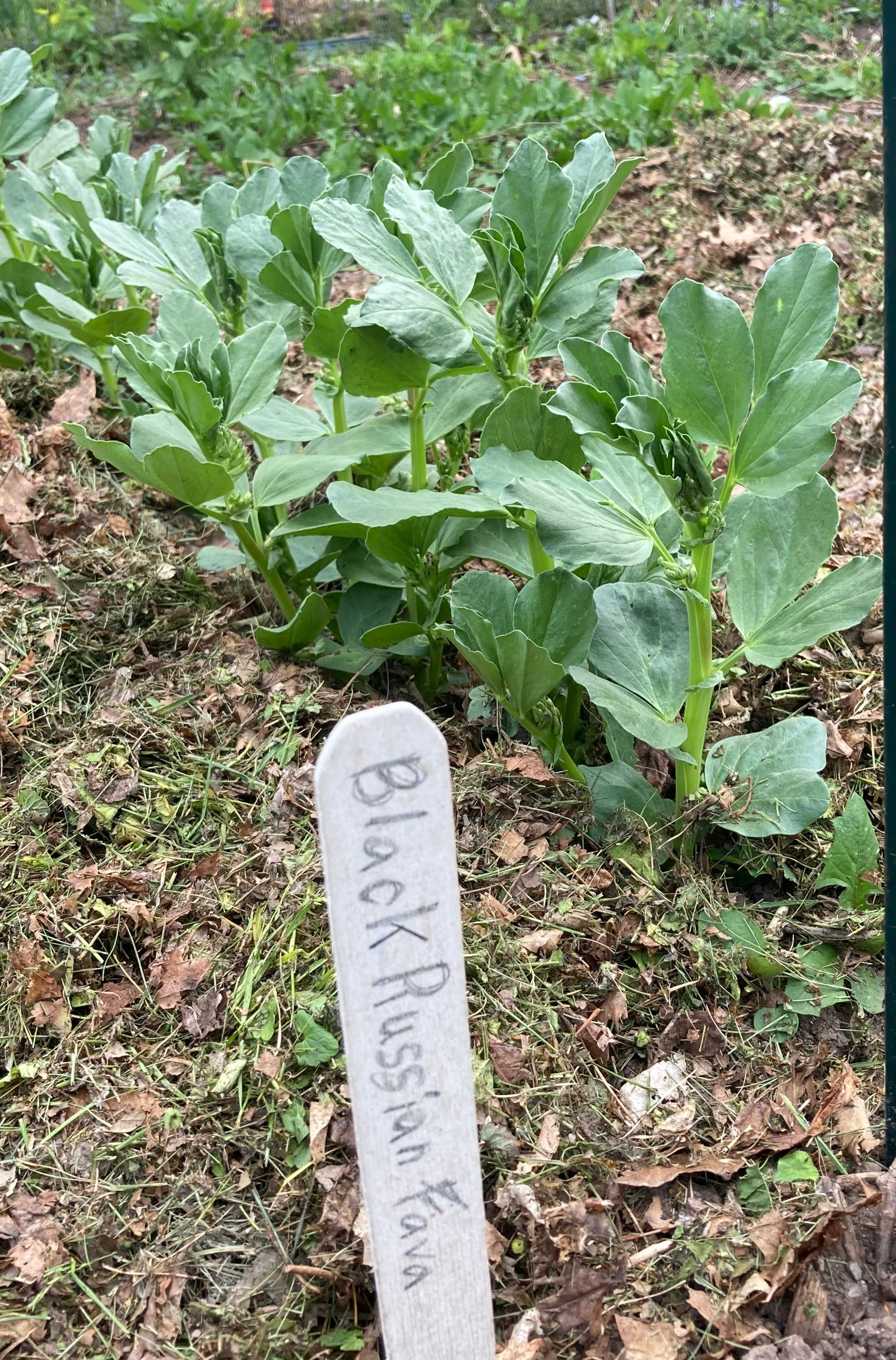
After too much rain in March and early April, we’ve had an incredibly dry few weeks. We’ve had to water new transplants more than we normally would, even though we withhold water as much as possible because we want to save seed from drought tolerant plants. The “Black Russian” fava bean seed we were worried about, having been under water for at least a week before germination, was fine! One row has almost perfect germination and the other is about 80%. Overall, it has been a cool spring for us, which means the cover crop hasn’t grown much, but it is still worthwhile to have planted it. We’ll give it until the very end of the month before terminating just before planting main season crops.
In other news, a damn woodchuck has taken up residence under the garden shed. Several gardeners in our local network have been reporting woodchuck activities in their gardens, crunching down rabbit fencing, climbing into fruit trees, and digging enormous holes. Just when we were feeling left out . . . here is ours, poking its head out of one of several holes leading under the shed. It has excavated a remarkable quantity of gravel and sand that used to be the shed’s foundation. It is kind of cute, but we know how destructive it will likely be in the garden once there is more out there to interest it. I’ve posted an eviction notice—that should work? Please send other ideas in case we need them.
Harvesting & Preserving
We’ve been munching lettuces, cress, herbs, spinach, and pea shoots from the cover crop, and cooking up Good King Henry and asparagus. I’ve pulled a few green garlics and green onions to use here and there.
We’ve started to harvest and dry the tea herbs, mainly mint and lemon balm. I prefer to do this early in the season when the tips are fresh and perfect.
The tulips, and now lilacs and earliest of the peonies have supplied us with lots of flower arranging material.


Indoor Seed Starting
Our last wave of seed starting will include annual flowers, okra, sesame, fenugreek, millet, and corn.
Seed for “Gaspe,” a diminutive flint corn variety from Quebec, is Oshkosh-grown seed from Chris Hoetschl, but it is a new grow out for us, which is exciting! It might surprise you that we start grain corn indoors, but if we were to direct sow it, we’d need to wait for the soil temperatures to warm up. Under lights indoors for just a couple of weeks, it germinates and grows really fast. This means when the soil is warm enough, we can put our plants instead of seed, which gives us a head start. Most grain corn in our area is machine planted, which usually means a later start time because of our usually wet and cool springs. Our earlier start increases our small-scale yield and puts our plants ahead of commercial fields for flowering time, reducing change of cross-pollination in our seed crop.
Outdoor Planting
At this point, we’ve hardened off and planted out all the allium, brassica, and celery seedlings. We also pushed some spring garlic and seed onions into the ground that had overwintered inside. Once the standing water subsided, we direct sowed peas, including “Sugar Magnolia” snap peas, another new-to-us but Oshkosh-grown variety from Chris Hoetschl. Three varieties of potatoes are in the ground and, most recently we planted lima beans, common beans, and long beans.


Outdoor Tending
All the tomatoes, peppers, and eggplants look great and are in the process of hardening off, which of course means a lot of time shifting them outside and back inside every day, adjusting times according to weather which has been shifting widely from 80 degrees F one afternoon to frost at night.
We’ve shifted some infrastructure to allow for crop rotation and isolation distance for seed saving. Our bean trellises are all now in new locations, which has enabled us to move/renew the strawberry bed, which hasn’t happened in several years. We transplanted the youngest plants to a new location, and left behind the old ones. We’re trying to see if we can work around them long enough to harvest berries from them one last time.
Tonight, we’ll spray the orchard trees with clay and neem oil as an organic pest control method.
Weeding and mulching are seemingly endless tasks, but we try to be strategic in focusing on weeds that are in flower so that they don’t get to the seed stage.


Up Next
Next, we’ll terminate cover crops and plant our the rest of the transplants—all the nightshade plus basils and okra. We’ll direct seed the cucurbits (cucumber, melon, zucchini, bitter melon, achocha, and squashes) and soybean. This will unfold in the first week of June. Mulching and weeding will also be ongoing.
A family member swears by Daschunds to eliminate groundhogs. He found out by accident. He let the dogs out and they went right after a groundhog he didn't know was in the garden and killed it. One on each side of the neck. 😬 He was horrified and started going outside before the dogs, clapping hands, shouting, trying to let the groundhogs know the dogs were on the way. He wanted to scare them off in advance. Unfortunately for him and the groundhogs, once those little dogs got the taste of their real breed purpose, they took to it like ducks to water. The groundhogs didn't stand a chance and he looked at the little dogs very differently after that summer. Depending on the laws were you live, humane traps and relocation may be legal. It's not where I live, and I've read that relocation often doesn't end up well for the groundhog anyway. I once traumatized a groundhog who had eaten my entire crop of beans to the ground one afternoon by chasing it around the garden bed waving a cast iron pan over my head, still in my work clothes. Never saw it again. I think it thought I meant business. 😅